Description
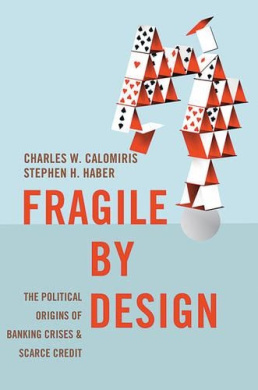
Why are banking systems unstable in so many countries–but not in others? The United States has had twelve systemic banking crises since 1840, while Canada has had none. The banking systems of Mexico and Brazil have not only been crisis prone but have provided miniscule amounts of credit to business enterprises and households. Analyzing the political and banking history of the United Kingdom, the United States, Canada, Mexico, and Brazil through several centuries, Fragile by Design demonstrates that chronic banking crises and scarce credit are not accidents due to unforeseen circumstances. Rather, these fluctuations result from the complex bargains made between politicians, bankers, bank shareholders, depositors, debtors, and taxpayers. The well-being of banking systems depends on the abilities of political institutions to balance and limit how coalitions of these various groups influence government regulations. Charles W. Calomiris is the Henry Kaufman Professor of Financial Institutions at Columbia Business School and a professor at Columbia’s School of International and Public Affairs. His many books include U.S. Bank Deregulation in Historical Perspective. Stephen H. Haber is the A. A. and Jeanne Welch Milligan Professor in the School of Humanities and Sciences and the Peter and Helen Bing Senior Fellow at the Hoover Institution at Stanford University. His many books include The Politics of Property Rights.