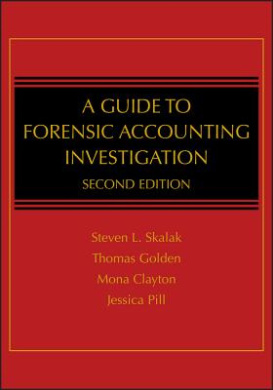
Description
Preface. Acknowledgements. Chapter 1 Fraud: An Introduction. Chapter 2 Psychology of the Fraudster. Chapter 3 The Roles of the Auditor and the Forensic Accounting Investigator. Chapter 4 Auditor Responsibilities and the Law. Chapter 5 When and Why to Call in Forensic Accounting Investigators. Chapter 6 Internal Audit: The Second Line of Defense. Chapter 7 Teaming with Forensic Accounting Investigators. Chapter 8 Anonymous Communications. Chapter 9 Personal Privacy and Public Disclosure. Chapter 10 Building a Case: Gathering and Documenting Evidence. Chapter 11 Independence, Objectivity, Skepticism. Chapter 12 Potential Missteps: Considerations When Fraud Is Suspected. Chapter 13 Potential Red Flags and Fraud Detection Techniques. Chapter 14 Investigative Techniques. Chapter 15 Corporate Intelligence. Chapter 16 The Art of the Interview. Chapter 17 Data Mining: Analysis of Structured and Unstructured Information. Chapter 18 Report of Investigation. Chapter 19 Supporting a Criminal Prosecution. Chapter 20 Working with Attorneys. Chapter 21 Financial Reporting Fraud and the Capital Markets. Chapter 22 Financial Statement Fraud: Revenue and Receivables. Chapter 23 Financial Statement Fraud: Other Schemes and Misappropriations. Chapter 24 Ponzi Schemes. Chapter 25 Money Laundering. Chapter 26 Foreign Corrupt Practices Act. Chapter 27 Construction Projects. Chapter 28 Contract Compliance. Chapter 29 Other Dimensions of Forensic Accounting. Chapter 30 Corporate Remediation. Index.