Description
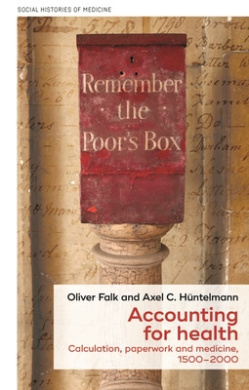
For most people, accounting is closely associated with money and accumulation. This book suggests a much broader understanding of the concept – as a set of calculative practices and technologies that transform objects into manageable units and enable practices of reckoning, valuing, controlling, justifying, communicating or researching. Applying its definition of accounting to the field of medicine, the book reveals the epistemological, social and moral dimensions involved. Making a living from medical treatment has serious ethical implications, as current debates about the economisation of medicine attest. But these debates rarely acknowledge that profiting from the pain and suffering of other people was as problematic in 1500 as it is today. Some versions of these patterns and problems have been with health and medicine for centuries – not only in the modern sense of economic efficiency, but also in a traditional sense of good medical practice and medical accountability. Spanning a period of five-hundred years and covering various western institutional settings, Accounting for health provides a fascinating description of the ways calculative practices have affected medical knowledge. Axel C. Hntelmann is Research Fellow in the Institute for the History and Ethics of Medicine at the Charit – University of Medicine Berlin Oliver Falk is Research Fellow in the Institute of Biomedical Ethics and History of Medicine at the University of Zurich