Description
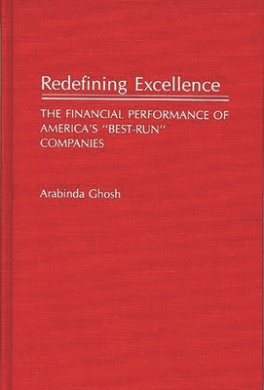
Management literature is full of examinations of so-called managerial excellence: firms such as GM, IBM and DuPont, have been managed in a fashion which others might emulate. In this book, Ghosh takes an analytical look at the real financial performance of such firms. His study of the financial performance of these well-know firms during the last 25 years (1960-1984), brings out significant findings that are useful to the investing public as well as to finance and management analysts. Taking a list of these “best-run” companies and a control sample from the Fortune 500, the author applies statistical and econometric tools to analyze their performance, comparing the “excellent” firms with the control group. By using these analytical techniques, Ghosh is able to determine whether these firms were indeed excellent from both the management’s and stockholders’ point of view. Over the period studied here, Ghosh discovers that the “excellence” of these firms has been transitory at best, that in most respects the control group has surpassed the “excellent” group in financial performace and market valuation in the long run and that the “excellent” group has not exceeded the performance or the market generally. Given these results, Ghosh has called into question the whole 1980s notion of “excellence” (what it is and what it is not) and which firms are to be emulated for the long-term good of the US economy.